The Purchase of my New iPhone 6+
September 9th had arrived. It was a date that I have been waiting for more than one year, and it was finally here. The date in which Tim Cook will announce the new iPhone 6, the 6th generation of a device that changed the world. While volunteering teaching Spanish at Carleton, I was eagerly scrolling down my tweeter feed to see the brand new images of the phone. I patiently waited. I was nervous, but yet excited because I knew that even though my phone still had a lot of live left, I was getting the iPhone 6. No questions asked.
In the previous months through roomers and leaks I had learned a lot about this new product, and I was most certain that it will be bigger, faster, and thinner. Finally, the pictures of the iPhone 6 started to flood tweeter but then Cook said: But wait, there is ONE more thing. That moment, I paused for a second, and realized that they would be probably launching something new, and I was right. That moment Cook announced the launch of the iPhone 6 plus. That thing was big. "Bigger than Bigger". I was so astonished to see that a brand such as Apple than before had critiqued tablet-phones (as I like to call them) would do such thing as launch some of their own. Myself has criticized those people that use those phones because I founded them impractical, and dumb looking... but, strangely enough I wanted one. I was determined to buy one.
As soon as classes were over I went into the website, not even looking too much into its characteristics, I tried to order online, but shipping was already estimated to take more than a month. Frustrated, I decided to wake up early the next morning and go to the Apple store. After I analyzed the phone, held it, played with it I found it too big, especially when I compared it to my current phone the iPhone 5. I doubted, but I had this feeling, I wanted to be unique, I wanted to show off I had the 6 plus, something that I knew would not be common. As I approached a sales man, after having my decision done I received a "sorry sir, we are sold out, try reserving one online and come to the store with your reservation". I was so disappointed and walked home empty handed.
This lead to a week of constantly going into the Apple website, searching for what models they had in stock, and always it was sold out. I gave up. A couple of weeks passed, and I had decided to keep my old phone, who wants to spend that amount of money anyways right?
Despite my decision, one day I was trying to study in the library and, as I often do, I diverged from the study and decided to look if there were phones available in Ottawa (just for fun). When I went into the website, the only model that they had, for pickup from 5:00 pm to 6:00 pm was the phone I wanted. Currently, it was 4:45, and out of pure instinct, not thinking it twice, I reserved one under my name. Until today I wonder what was the motivation I had to do so, because the situation seemed unrealistic: I had already decided to keep my old phone, and just because there it was, the only phone available, I packed by books and was heading towards the Rideau centre to buy the phone. When I got into the store, they had my phone ready, and as I was purchasing candy I handed in my credit card: 966.98 dollars. After I walked out the store I just wandered what have I done, I had spent almost one thousand dollars in a phone, that I didn't really need it, why? I was suffering of acute post purchase dissonance, but it all went away as I opened the package and saw my brand new iPhone 6 plus.

According to the course textbook, motivation can be defined as the processes that leads people to behave the way they do. It occurs when a need is aroused that the consumer wishes to satisfy, and once a need has been activated, a state of tension exists that drives the consumer to reduce or eliminate the need. In this case, my motivation was to acquire my brand new iPhone 6 plus, driven by the technology-maniac I am, I really wanted the phone. Even though, at some stage of the process my motivational strength, which is the degree of willingness to expend energy to reach the goal, became dormant (as I had convinced myself I would not buy the phone), as soon as the product became available I almost systematically reserved the phone. I found this kind of behavior in marketing, and in consumer behavior very interesting as, as soon as we know we cannot have something we want it even more, and as soon it is available we buy it, making sure that we do not loose the opportunity for it to be sold out again.
In this particular situation, I believe that there are many specific needs in buyers behavior that are clearly demonstrated.
Need for achievement: Need for achievement can be defined as value of personal accomplishment. I wanted to be a winner, I wanted to win the system, and I wanted to have the phone. When finally the phone was made abatable for reservation, I felt I was a winner because even though I did not need it, I won the product from the rest of the people, I would have one and the result will not. This also brings us to the second point that can be exemplified in this example.
Need for Uniqueness: To assert one's individual identity. When I was first looking for the phone, I was debating weather to buy the iPhone 6 and iPhone 6 plus. When I decided to buy the iPhone 6 plus I knew that I was paying a higher price not only for the product, but for the need of being unique. I knew that it was the product that sold out faster, and that not many people will have it as they consider it to be "too big". Funny enough, I too considered it to be too big and impractical but my need to be unique, the need for people to tell me "Wow is that the new iPhone 6 plus" was larger than my own interests. Now that I think about it I paid almost one thousand dollars to get the glances, the questions, to be the conversation starter.
Furthermore, the need for uniqueness also turned into an opportunity of consumer affiliation as people started asking to see my phone, jokingly bend it and asking "Does it Bend? Can I try". This product, even though it did proceed a lot of post purchase dissonance in me, and I myself couldn't believe I have bought it (until the credit card invoice came of course), had satisfied many needs that I had as a consumer, and now, I treat it as my baby. It is funny, but currently I am so used to its size that I can no longer type in the micro iPhones predecessors.
And to answer one last question.
The phone does not bend!
%2B18.47.jpg)
As a consumer, sometimes is bothers be how fast your technology can be obsolete in today's world. If you do not get the iPhone 6 right away, you are obligated to wait 8 more months so that you can get the iPhone 6s, because if you buy the 6 just before the new one is coming out, you feel you are not getting the sweet deal of fresh technology. For technology companies though this is a huge opportunity. Technology companies understand that now a days consumer motivations are guided by the need of having the last technology, and being able to provide newer technology each time (as explained by Moore technology advancement law), they motivate the consumer to buy things that are only marginal improvements of the last technology. Technology companies have learned to market their products so well, that today consumers believe they are getting top of the notch technologies that did not exist before. Consumers (including myself), are willing to spend 1000 dollars on a phone that is bigger, and that has a fingerprint scan to lock it (nothing great if you think about it). In today's world, there is a huge opportunity for technology companies as consumers are now trained to want the latest, even though they might own a perfectly functional technology.
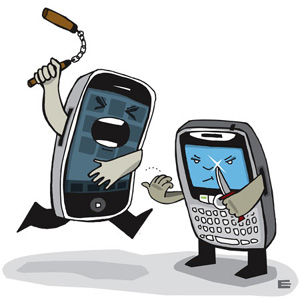
In this fast paced world, companies should also have a lot of precautions on how they proceed, and how they market their products. The best, sole, example for this has been the rise and fall of Canadian Blackberry, which failed to listen to consumers and their wants, leaving a very important message in this industry. Even though you invented it, it doesn't mean you own it. This means that consumers technology preferences are often evolving and that even though you invented something (the smartphone) it does not mean you know everything about it (for example, Blackberry resisting to change to touch screens and adding features such as apps). This is a very important lesson for consumer behavior, as consumers preferences are always evolving and adapting to new trends, so companies should be proactive rather than passive on following new trends, and adhering on what the consumer demands if they want their products to be successful. It is very important to listen to the market, be open to change, and follow consumer wants. This has been the key of Apples iPhone, as they have followed consumer wants, innovated to make their products the trend, and have taught consumers that when they are buying their products they are buying status, innovation, and a trend of change, and consumer oriented production.
Solomon, M. R., Zaichkowsky, J. L. and
Polegato, R. (2013) Consumer Behaviour:
Buying, Having, and Being, Sixth Canadian Edition. Toronto: Prentice Hall
Canada.